Advancing Maternal Health Across Nigeria: MHAC Project Reaches Key Milestones in Ekiti, Kaduna, and Lagos States
Across three Nigerian states, a significant transformation is unfolding. Advocates are presenting evidence, government officials are making commitments, and financial institutions are engaging directly with healthcare providers. At the center of it all is the Maternal Health Advocacy and Communications (MHAC) Project – implemented by ACIOE Foundation and Nigeria Health Watch with funding from MSD for Mothers -working steadily to reshape the enabling environment for maternal health outcomes in Nigeria.
Operating across Ekiti, Lagos, and Kaduna States, MHAC advances evidence-based advocacy and private-sector engagement to create enabling environments for digital health solutions and sustainable private -sector healthcare financing. Between February 2025 and March 2026, the project convened high-level stakeholder engagements in all three states, each advancing a distinct but interconnected agenda. ACIOE has acted as a strategic bridge connecting the market actors with lenders and policymakers together under one roof.
Ekiti State: Government Commits to a Digital Health Future
In February 2026, ACIOE Foundation convened the Ekiti State High-Level Stakeholders Dialogue on the theme “Creating an Enabling Environment for Digital Health”. The event drew 57 participants, including Permanent Secretaries, Directors of relevant MDAs, Policymakers, Development Partners, and private sector actors.
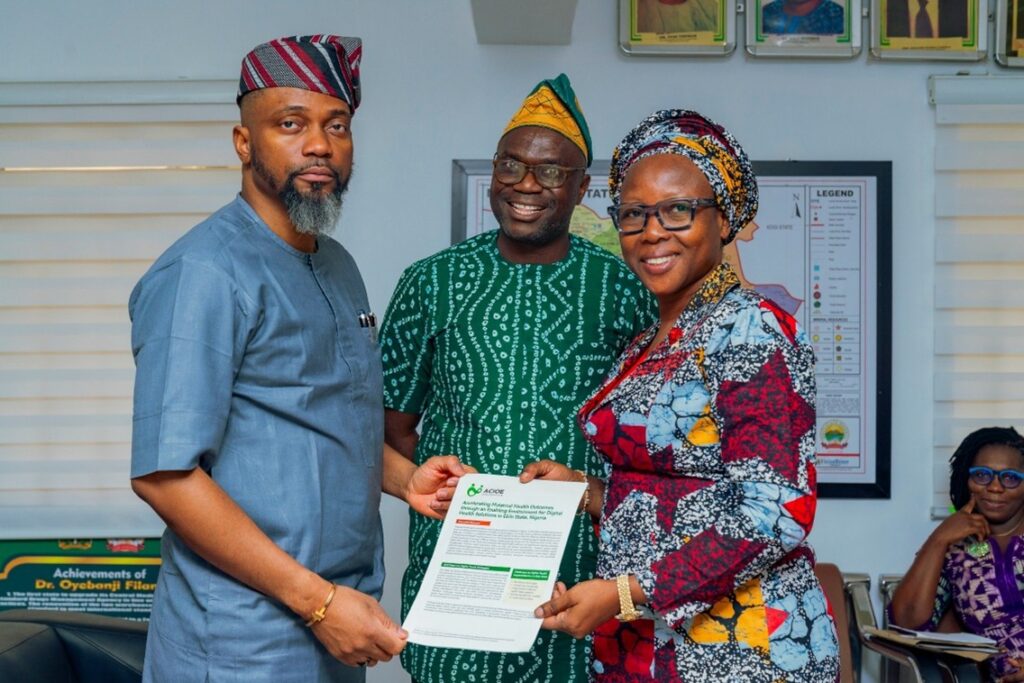
“These advocacy asks are within the purview of what my Ministry could do, so I commit to implementing them.”
Hon. Oyebanji Filani, Honourable Commissioner for Health, Ekiti State
Findings from the ACIOE Foundation’s rapid assessment informed a targeted six-point advocacy brief:
- Fragmented Electronic Medical Record (EMR) systems
- Lack of a digital health framework.
- The absence of ICT focal persons at the Primary Health Centers (PHCs) level.
- Low health insurance awareness and coverage.
- The persistent gap between Antenatal Care (ANC) attendance and skilled birth delivery.
The response was unprecedented: every ask was formally adopted. Key commitments secured included the creation of a Digital Health Desk, the establishment of a Digital Health Technical Working Group (TWG), the expansion of the Ulerawa State Health Insurance Scheme, and dedicated funding to scale digital maternal health innovations to improve ANC attendance and skilled delivery across all 16 LGAs in Ekiti State. Furthermore, the mDoc Digital Mom model – which provides mentorship and referral support to pregnant women from antenatal registration through delivery – received a formal state commitment to sustain and scale. As we tracked these commitments as of the end of March 2026, these commitments are already yielding results, with the Digital Health Desk and the Technical Working Group fully established and operational.
Kaduna State: Multisectoral Partnerships Promoting Inclusion and Increasing Financing of Innovation for Healthcare.
MHAC’s engagement in Kaduna has deepened considerably since its first introductory meeting with the State Ministry of Health in February 2025. By December 2025, the project convened the Health Access 2025 Roundtable Dialogue on Health Financing and Digital Health Acceleration —a multi-stakeholder forum that brought together government ministries (Health, Finance, ICT, Planning), the Legislature, the Central Bank of Nigeria, the Bank of Industry, the Development Bank of Nigeria, commercial banks, fintech providers, implementing partners, civil society, and the media.
“There is a need for multisectoral coordination across health, finance, ICT, and planning institutions to address persistent financing constraints and digital infrastructure gaps in primary healthcare.”
Hajiya Umma K. Ahmed, Honourable Commissioner for Health, Kaduna State
The dialogue highlighted measurable progress: through investments in locally developed digital enrollment and claims management platforms, Kaduna State’s health insurance coverage has risen from 4.5% to 9.6% of the population. Yet coverage remains skewed toward the formal sector, with informal workers, rural communities, and low-income households still largely excluded. There are high commercial banks’ lending rates, currently over 24% in interest rates. These high interest rates remain a critical barrier to private health sector growth.
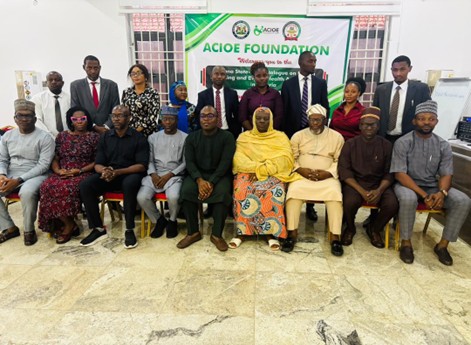
The roundtable produced an actionable four-point consensus:
- Prioritise micro-payment and pay-as-you-go insurance models for the informal sector.
- Promote single-digit interest financing for health-sector MSMEs through Development Finance Institutions such as the Development Bank of Nigeria (DBN) and Bank of Industry (BOI).
- Establish a State-led regulatory sandbox for health financing innovation.
- Scale blended finance frameworks that combine public subsidies, development partner funding, and private capital.
The Kaduna State House of Assembly committed to improving the affordability of health insurance for at least 50% of the population, with focused investment in Kaduna’s seven high-burden LGAs. Since the dialogue in December 2025, Kaduna has accelerated progress in financial inclusion and sustainable health financing through strong government leadership and multi-sector partnerships. Nearly 2 million residents have been supported to obtain essential identification and open bank accounts for contributing to health insurance premiums, strengthening the State’s social and financial database, and advancing efforts to reach underserved populations. Furthermore, high-level advocacy engagements with His Excellency, the Governor of Kaduna State, and the Commissioner, Ministry of Budgets and Economic Planning, have secured commitments for the timely release of health financing allocations, reinforcing fiscal accountability. Notably, strategic collaboration with partners has mobilised an estimated ₦1.2 billion in new resources to expand health insurance coverage for vulnerable populations. At the same time, innovative private sector and community-based enrollment models supported by financial institutions, transport unions, and traditional leaders across 11 Local Government Areas are improving last-mile access, strengthening local ownership, and laying the foundation for scalable, sustainable health financing systems.
Lagos State: Transitioning Advocacy into Action on Health Financing and Digital Health Innovations.
The Lagos State dialogue convened one of the most diverse groups in the MHAC engagement efforts, including government officials, financial institutions, private healthcare providers, patent medicine vendors, and healthcare professional associations. The backdrop was stark — a maternal mortality ratio of 430 per 100,000 live births, significantly higher than the SDG target of 70.
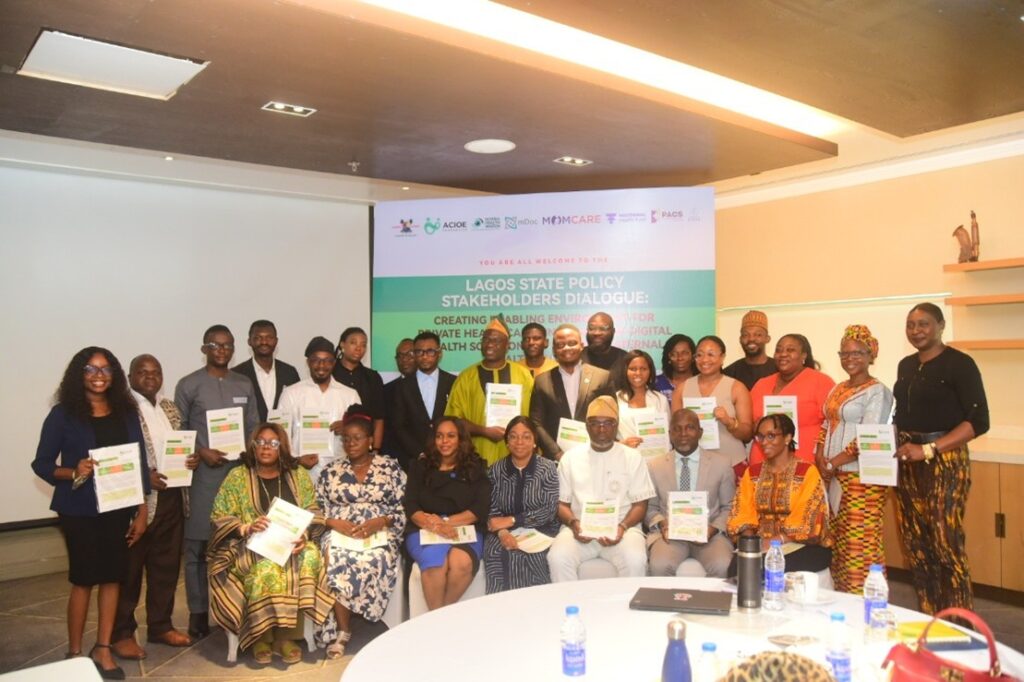
The MHAC advocacy brief presented a three-pronged agenda:
- Health financing reforms (including meeting the 15% Abuja Declaration target and expanding the Lagos State Health Insurance Scheme).
- Digital health reforms and stronger frameworks for private-sector integration.
- Private sector integration; addressing the Loan interest rates of up to 36% for private health facilities, emerged as a shared concern, with stakeholders calling urgently for concessional financing mechanisms.
Updates from MSD for Mothers collaborators – including Digital Mom, FORMom, MOMCARE, PACs, and Project Aisha – demonstrated that while innovation is thriving, scaling requires a robust financing architecture and a supportive regulatory environment, and data infrastructure.
A Project Building Momentum
Taken together, these engagements illustrate the MHAC Project’s theory of change in practice: generating evidence, amplifying the work of the MSD for Mothers collaborators, convening the right stakeholders, presenting actionable advocacy asks, and securing trackable commitments. The work is far from finished, but the foundations are being laid, State by State, dialogue by dialogue, to reshape the enabling environment for maternal health in Nigeria
We are grateful to MSD for Mothers for their continued investment in this work, to Nigeria Health Watch for their partnership in communications, and to all government officials, development partners, and private sector actors who have engaged with commitment and purpose. The progress ahead depends on all of us.
Written by:
Adenike Badiora
Advocacy Lead
ACIOE Foundation